
So, you’re looking for new office space and want to learn a little more about your options before deciding. One of the most common questions businesses ask is: What’s the difference between a serviced office and flexible office space? Understanding the distinction can help you find a workspace that suits your team, budget and future growth plans. Read on to learn about the key differences, the benefits of each option and how to determine which is right for your business.
What is a Serviced Office?
A service office is a private, ready-to-use workspace where the day-to-day management of the office is taken care for you. Rather than organising your own utilities and office services, you can move in and get started. You will usually also have access to shared facilities such as meeting rooms, breakout areas, kitchens and reception services.
At our Innovation Centre, a serviced office offers more than just a place to work. You’ll also become part of a community of businesses, with access to networking opportunities and business support to help you connect and grow.
What is a Flexible Office Space?
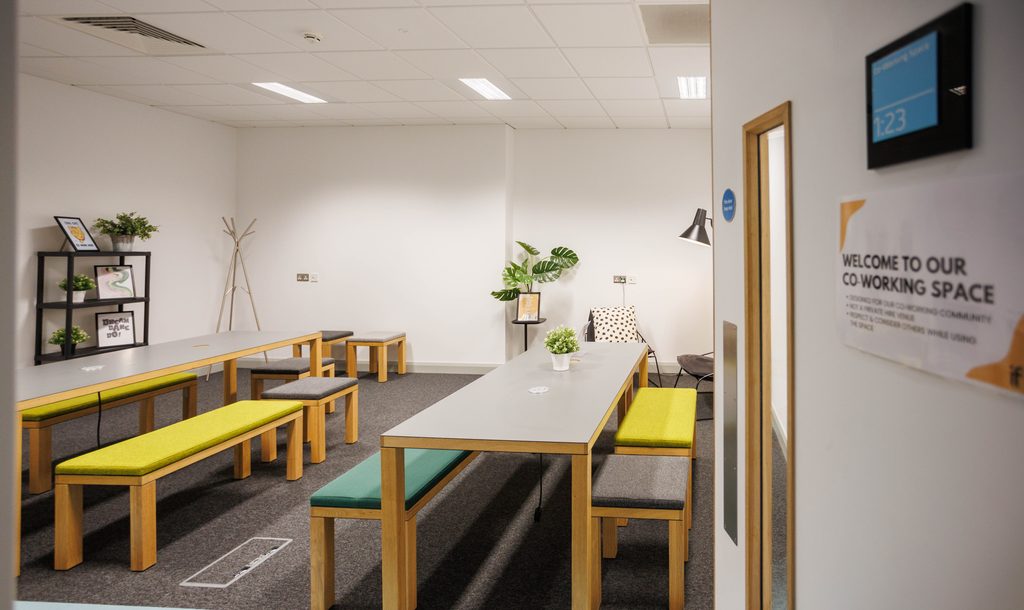
Flexible workspace is a broader term covering a range of workspace options available on more adaptable terms. This can include private serviced offices, coworking, hot desks, dedicated desks and virtual office services.
The benefit is flexibility. You can choose the space that works for your business now, with the option to adapt as your needs change. That could mean adding desks as your team grows, using coworking space for hybrid working, or moving into a larger private office without having to leave the centre and its community.
Serviced Office vs Flexible Office Space: Key Differences
The simplest way to think about it is that a serviced office is a type of flexible workspace.
A serviced office gives your business its own private office, while other flexible workspace options, such as coworking or dedicated desks, involve sharing a larger working environment.
A serviced office may suit you if you:
- want a private space for your team
- prefer the convenience of a managed office
- need professional facilities without managing them yourself
- want the flexibility to grow without committing to a traditional long-term lease
Coworking or other flexible workspace options may be a better fit if you:
- work independently or have a smaller team
- work on a hybrid basis
- don’t need a private office every day
- want a flexible base in a new location
Which option is better for Startups?
There is no single solution that suits every startup. The right workspace depends on factors such as team size, budget, growth plans and whether the business needs a dedicated office or a more flexible working arrangement. With that considered, for most early-stage startups, flexible office space offers the greatest choice and scalability. However, startups that need privacy, a dedicated workspace and predictable monthly costs may find a serviced office the better option.
Still not sure? Our Innovation centres often combine flexible workspace, private offices, business support, networking opportunities and access to a wider business community. This allows startups to choose the workspace that suits them today while retaining the flexibility to grow in the future.
Which option is better for Established Businesses?
Established businesses that need a dedicated, professional office environment will often find a serviced office the better fit. Businesses with highly flexible, hybrid or multi-location teams may benefit from the wider choice available within flexible office space. In many cases, a serviced office within a flexible workspace environment like our Innovation Centre offers the best of both worlds.
Still not sure which workspace is right for you?
Whether you’re launching a startup or growing your team, choosing the right workspace can be challenging. Speak to our team to discuss your requirements and explore the workspace options available at our centre.
Why Many Businesses Choose Flexible Space at Innovation Centres
Businesses choose flexible space at innovation centres because they combine adaptable workspace with business support, networking opportunities, professional facilities and a community of like-minded organisations. Unlike traditional offices, innovation centres are designed to help businesses grow as well as provide a place to work. We offer a range of workspace options and additional support that can benefit businesses at every stage of development. Book a tour at Innovation Factory to explore your flexible working options.
By Lorna McBain

